Crystal Clusters vs. Single Points: Which Specimen Should You Collect?
October 31, 2026 - Crystals
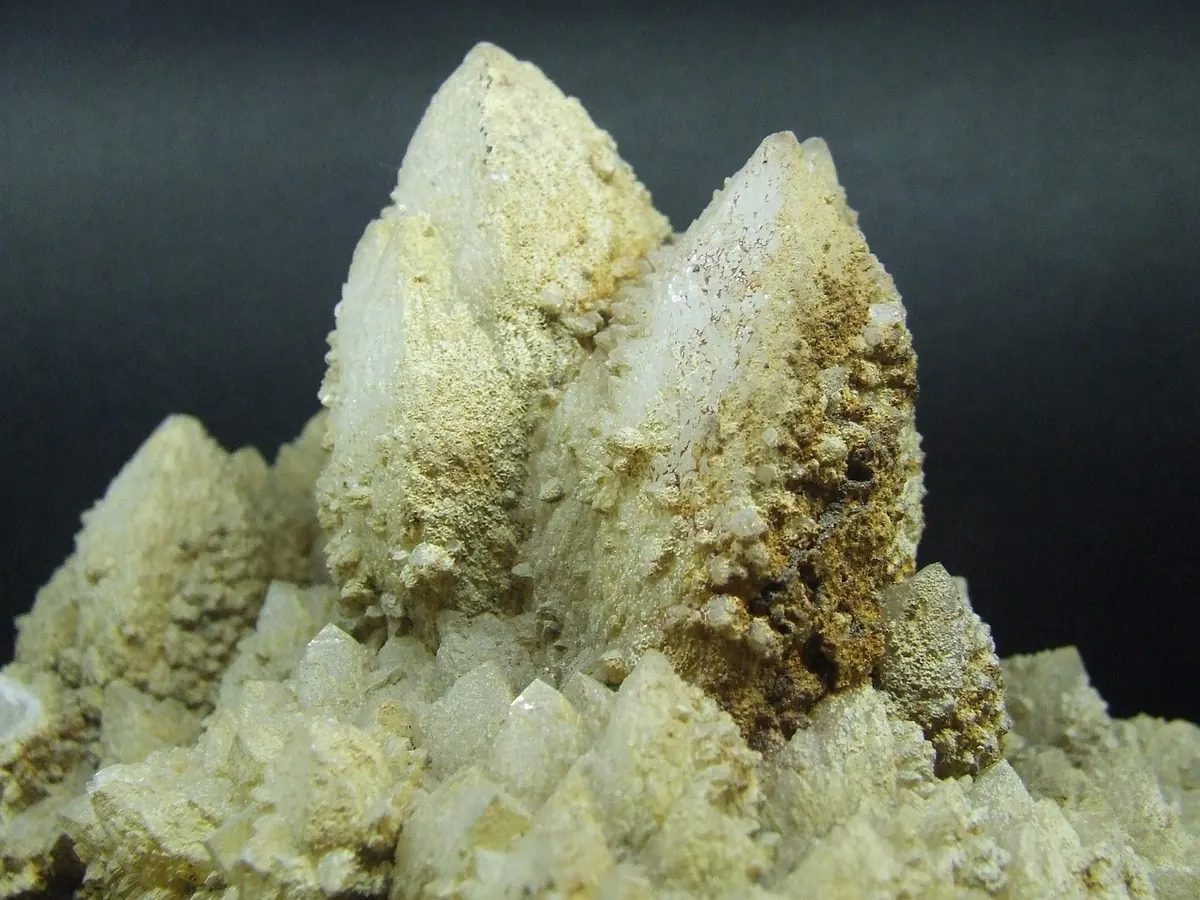
Every collection has one: a tray labelled "quartz" with two or three pieces that are quietly wrong. Their edges are too rounded, they feel slightly soapy under the thumb, and one of them fizzes in vinegar if you are curious enough to try. Calcite is almost always the culprit. It grows in the same limestone cavities and alpine-style veins as quartz, shares most of its colour range, and can be milky, glassy, honey-coloured or pink. On a shelf at arm's length, a blocky calcite rhomb and a stubby quartz point can pass for cousins.
Up close they are not. Quartz and calcite differ in hardness, in the way they break, and in how they survive a few million years of weather. Three checks — crystal shape, broken surfaces, and a scratch across glass — will settle the identification of nearly every specimen you meet. None requires a laboratory, and the ones that carry a small risk of damage come last.
Start with the outline. Quartz, when it is allowed to grow freely, builds a six-sided prism topped by a pyramid. The prism faces are parallel to each other, the tip is symmetrical, and the whole thing looks engineered. Twisted sceptre growths and flattened Japan-law twins exist, but even they keep a recognisably hexagonal geometry.
Calcite is the shapeshifter of the mineral kingdom. It forms rhombohedra, steep scalenohedra that collectors call dog-tooth spar, flat nailhead crystals with a shallow "roof" on top, thin tablets, fibres, and great coarse granular masses. If your specimen is a chunky block with slanted faces, or a crystal that tapers to a point off-centre, calcite deserves the first guess.
Shape fails, though, the moment you are looking at vein material. Massive white quartz from a pegmatite and massive white calcite from a limestone quarry are close to indistinguishable in a hand specimen. That is when you move to the next question.
Hardness you can test later; cleavage you can read straight off the surface. It is the single most useful difference between these two minerals, and it is visible without any tools at all.
Quartz has no cleavage. It fails by conchoidal fracture, producing curved, shell-shaped surfaces that catch the light in smooth sweeping highlights, exactly like the base of a broken bottle. Those surfaces are sharp. Broken quartz will cut a finger, and it will cut a polishing cloth.
Calcite cleaves in three directions, and every fragment it produces tends toward a squashed cube: six rhombic faces, none of the angles at ninety degrees. Break a coarse calcite mass and you get stair-step surfaces, flat planes stepping down in parallel offsets. Turn the piece slowly in the light and the individual cleavage planes flash as distinct flat mirrors rather than a continuous curve. Once you have seen that staircase on a piece of calcite, you will not mistake it for quartz again.
Quartz is vitreous, sometimes greasy in raw vein material, and its prism faces are often frosted with fine horizontal striations running across the width of the face. Calcite is vitreous to pearly, occasionally waxy, and its crystal faces usually show fine growth lines running roughly parallel to the face edges. Under a loupe the direction of those lines is a good tiebreaker.
Wear is the test most collectors overlook. Quartz keeps a crisp edge after centuries in a river. Calcite does not. A calcite crystal that has travelled in gravel arrives with rounded corners, bruised faces and impact pits, and its edges crumble under light handling. If a specimen looks sharp in the hand but its corners are dulled and its faces are scratched in every direction, be suspicious.
Ignore heft. The densities are so close — quartz around 2.65, calcite around 2.71 grams per cubic centimetre — that no one can tell them apart by weight in the hand, whatever the old field guides suggest. Colour is no better: both come white, grey, yellow, pink, green and clear.
Quartz sits at 7 on the Mohs scale, calcite at 3. That gap is wide enough to be decisive, so long as you test in the right order: use the specimen as the tool, not as the victim.
Two cautions. Glass can shatter or throw splinters, so work over a table rather than in your hand, and wear eye protection. And every scratch you make on a specimen is permanent — pick the underside, the base, or a corner that is already chipped, and record it in your catalogue. On a good display piece, stop at the glass test and leave the specimen alone.
Calcite is calcium carbonate, so a drop of vinegar on a freshly broken or powdered corner will raise a few slow bubbles. Quartz does nothing at all. Use a single drop on a hidden spot, then rinse with water and dry. Dilute hydrochloric acid fizzes instantly, but it is hazardous, it etches the specimen and it dulls cleavage faces; if you use it, do so in tiny amounts with gloves, eye protection and good ventilation, and never on a piece headed for a display case.
For clear material there is a second, entirely harmless confirmation. Lay a clear calcite cleavage rhomb over a line of small print. The letters double. Quartz never does this, however water-clear it is.
The streak test, often recommended for other minerals, is useless here. Both give a white streak, and quartz is harder than the porcelain plate itself, so it simply gouges the plate and leaves its own scratch. Watch for the reverse error too: a "calcite" that scratches glass is not calcite, whatever the label says.
Keep a known quartz point and a calcite cleavage rhomb in your field bag as references; comparing a doubtful piece against two knowns takes seconds and settles arguments at the swap table. Label specimens the day you collect them, with the locality, and note any test you performed. In a year or two your eye will do most of this work before your hand reaches for the glass slide — but until it does, cleavage, hardness and a drop of vinegar will keep the collection honest.
Photo: Zajcsik / Pixabay
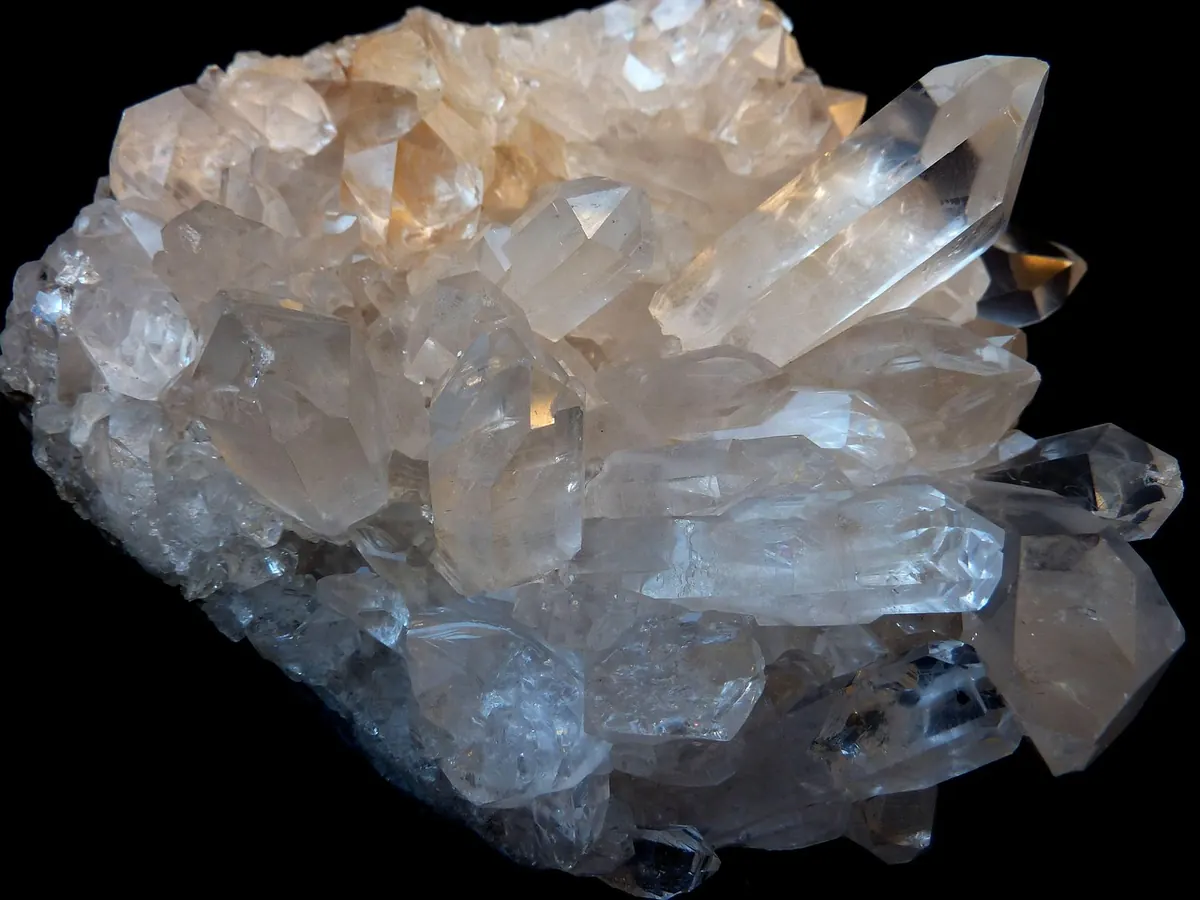
Clusters bring drama, context and a story about how crystals grow; single points bring clarity, easy display and a...
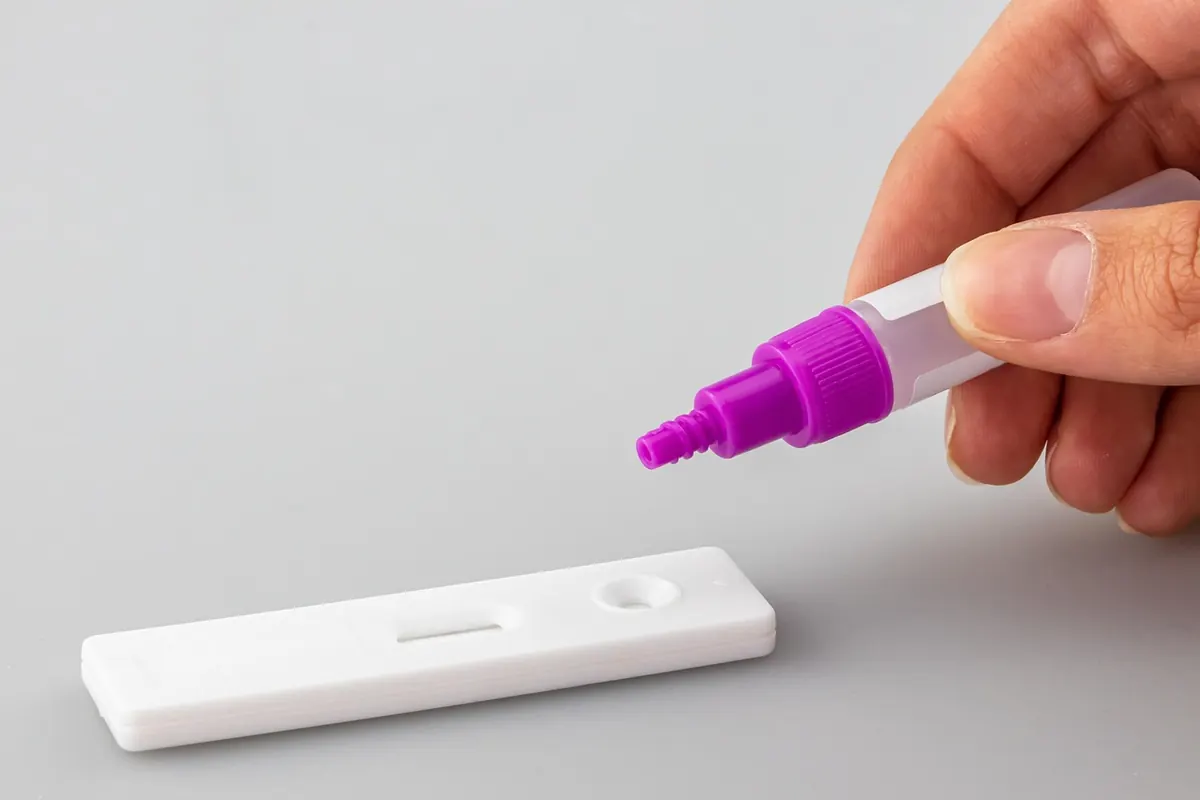
Mohs hardness testing can identify minerals and narrow unknowns, but only if scratches are made on inconspicuous...
Copyright © 2026 Quarzo Diario. All Right Reserved.