Crystal Clusters vs. Single Points: Which Specimen Should You Collect?
October 31, 2026 - Crystals
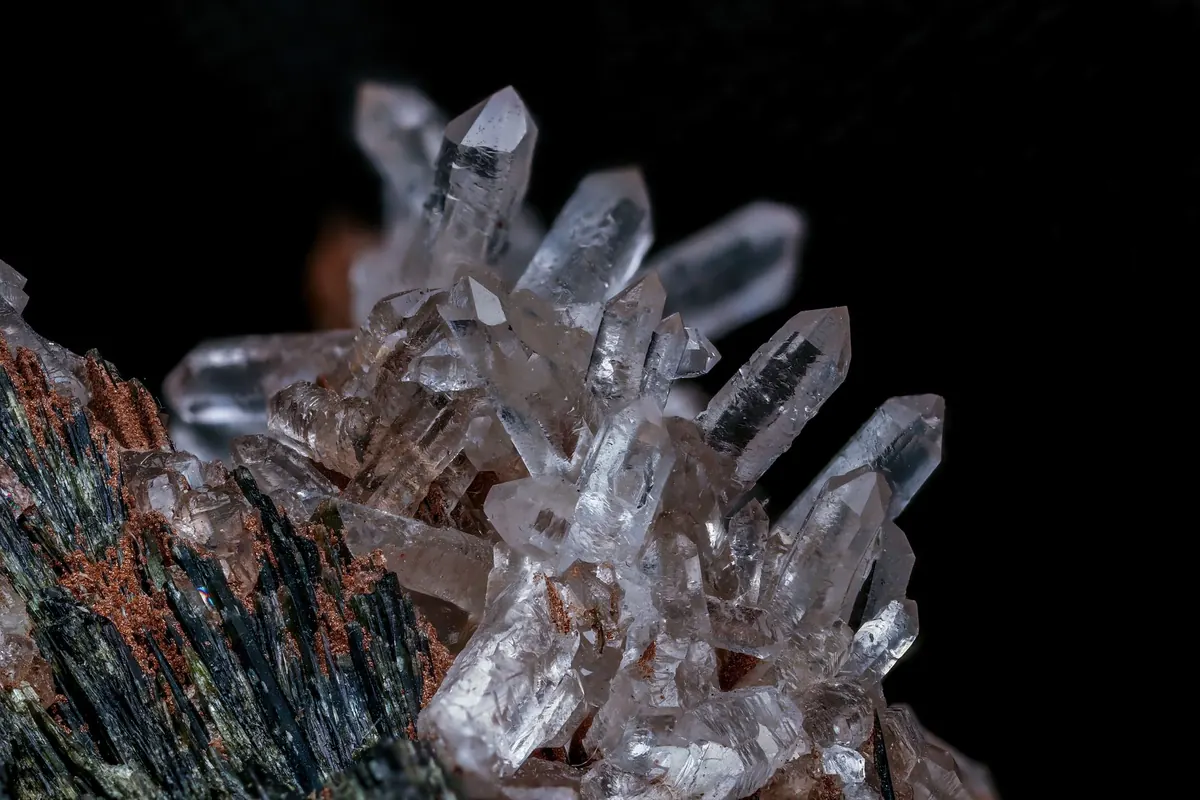
Two fluorite cubes sit side by side in the same drawer. The first is a clean, glassy cube with flat faces and crisp edges. The second is a stepped, half-formed thing that looks like it was assembled in a hurry and then interrupted. Both are fluorite. Both probably came out of a cavity in the same kind of rock. The difference between them is habit—the outward shape a crystal took while it grew—and once you start reading habit, a hand specimen stops being a pretty object and becomes a record of events.
That record is not always complete, and it is easy to over-read. But the basics are learnable in an afternoon and useful for the rest of a collecting life.
A mineral's crystal system describes the symmetry of its internal lattice. Habit describes the shape the specimen actually took. The two are related but not the same thing, and confusing them is the most common source of muddled thinking at a show table.
Calcite is the classic example. Its lattice is trigonal, but calcite turns up as rhombohedra, as steep scalenohedra, as flat prisms, as thin plates, and as pale fibrous masses. The system never changed. The conditions did. Ask a dealer what habit a calcite is in and you will get a more useful answer than asking for the system.
A form is a set of symmetrically equivalent faces. A cube is a form. So is an octahedron. Most specimens show a combination—a quartz crystal is a hexagonal prism capped by rhombohedral faces, and those two forms meeting at a termination are what make a quartz point look like a quartz point. When you describe a specimen, describe the dominant form first, then the modifiers.
You do not need all of these, but you will meet them in catalogues and they are worth having at hand:
Use three words, not ten. "Prismatic, striated, slightly tapered" tells a buyer more than a paragraph of adjectives.
Crystal faces grow by adding material layer by layer. When supply is slow and steady, layers finish before the next starts and you get flat, bright, well-defined faces. When supply is fast, edges and corners—where there is more exposed surface to attach to—run ahead of the face centres. The result is a hopper crystal: stepped, with a hollow or ridged face and a sunken centre. Push that further and you get skeletal growth, where only the framework of the crystal remains.
Hopper halite and hopper quartz are familiar in collections, and once you have seen a few, a normal flat face looks different—it looks unhurried.
Striations are the same story at a smaller scale. Pyrite cubes usually carry fine lines parallel to the cube edges. Quartz prism faces are striated horizontally, perpendicular to the long axis. Tourmaline prisms are striated lengthwise instead. These are growth features, and they are a useful check: striations cross a broken face without stopping, which helps you tell natural faces from cleaved or sawn ones.
A chipped termination and a natural one can look similar in a photograph. A loupe and a tilt of the wrist usually settle it—growth faces carry fine texture, breakage is glassy and blank.
Euhedral crystals need open space. That is why vugs, cavities, and fracture openings produce the sharp specimens and why crystals grown in clay or tight vein fill are anhedral and intergrown. If your specimen has faces on one side only and a broken-looking base on the other, it grew on the cavity wall and was freed when the pocket was opened.
A sudden influx of saturated fluid produces many nucleation points at once, so you get crowds of small crystals. Slow, repeated supply favours fewer and larger ones. Neither is better; they simply record different plumbing. A specimen of many tiny parallel points on a single stalk suggests fast, repeated nucleation on an existing seed.
Look for phantoms—pale or coloured outlines inside a clear crystal, as in amethyst—and fine growth zoning visible in side light. A frosted or pitted surface followed by clear overgrowth means the crystal was partly dissolved and then resumed growing. Each of these is a pause in the supply, and pauses are common in real pockets.
Some shapes are not single crystals at all. Twinning is the intergrowth of two individuals in a fixed orientation: gypsum's swallowtail, fluorite's interpenetrating cubes, calcite's butterfly groups. Twinning in a specimen tells you about the conditions during nucleation rather than afterwards, and it is often consistent across a whole pocket.
Parallel Growth—many crystals sharing a common orientation, as in clusters of quartz points all standing the same way—indicates repeated nucleation on a single seed under stable conditions. Epitaxy is the extreme version, where one mineral grows on the lattice of another; rutile needles on hematite plates are the well-known example. Both are worth noting in your label, because they say something about the order in which the pocket filled.
The fastest way to sharpen this skill is boring and effective: keep a small notebook with a sketch of each specimen and one sentence on its habit. Sketching forces you to notice which faces are present and which are missing. After thirty entries you will start recognising hopper growth, dissolution textures, and twinning without hunting for the words, and you will catch the mislabelled specimens that turn up in every dealer's stock.
Habit is the part of a mineral that conditions wrote for you. Learn to read it and every new piece in the drawer has something to say.
Photo: Глеб Коровко / Pexels
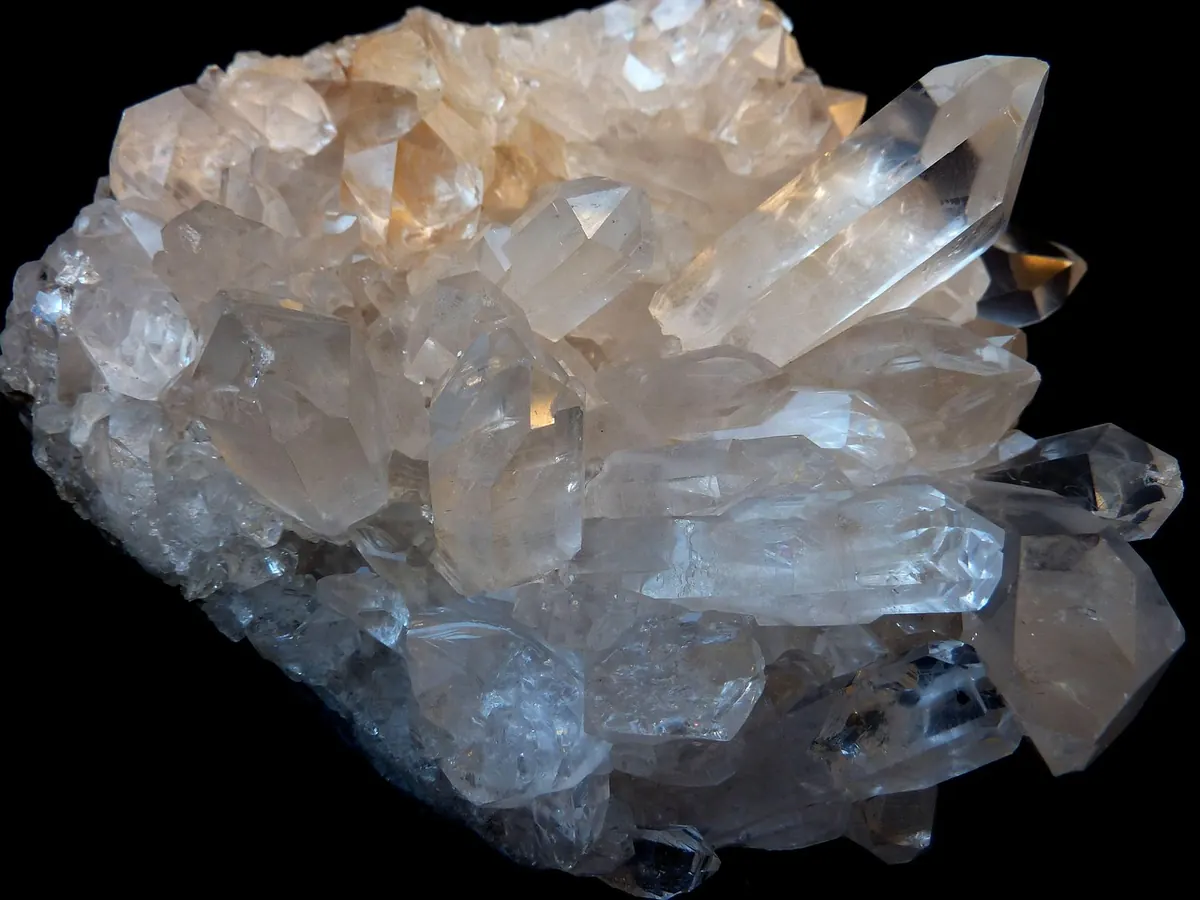
Clusters bring drama, context and a story about how crystals grow; single points bring clarity, easy display and a...

Mohs hardness testing can identify minerals and narrow unknowns, but only if scratches are made on inconspicuous...
Copyright © 2026 Quarzo Diario. All Right Reserved.